Starting your sustainability journey as a small business owner can feel overwhelming—especially when most resources seem designed for large corporations with dedicated ESG teams. That’s why we’re excited to share this honest reflection from Sarah Banks, who runs a solo consultancy and recently tackled a sustainability course designed for small businesses. Sarah’s experience perfectly captures the real challenges micro business owners face: limited time, mixed home-and-work expenses, and the frustration of trying to measure impact when you’re already wearing ten different hats. Rather than offering another list of “should-dos,” Sarah shares what she’s actually implemented and why authenticity beats perfection every time. If you’ve ever felt like sustainability advice doesn’t quite fit your small business reality, this post is for you.
—
Back in early 2024, I started the Green Skills for Small Businesses 6-week course which was offered by Small Business Britain. When I signed up, I was hopeful that this course would give me some small practical steps on how to make my business more sustainable but after week one, I felt frustrated and as if I was already failing and in the subsequent weeks this feeling increased! To the point, I’ve only completed half of the course at the time of writing this due to all the frustration!
“Meeting the sustainability goals as a solo business owner or micro business is really hard and you will never be able to complete everything as it takes time and resources—BUT it is important to recognise where you are at and what you can do.”
That being said, I sat down and reflected on the course so far and what I’ve implemented as a small business owner to make my business more sustainable. Before I share this I would also like to say that meeting the sustainability goals as a solo business owner or micro business (under 10 employees) is really hard and you will never be able to complete everything as it takes time and resources BUT it is important to recognise where you are at and what you can do.
Key takeaways from the Green Skills for Small Business Course (so far)
Sustainability Goes Way Beyond ‘Green’: Yes, there’s the environment but the UN has created 17 Sustainable Development Goals covering environmental, social and economic areas: so while some of us won’t be able to make much impact on the environment goals we can often do more in the social and economic areas.
Home + Business = Measuring Nightmare: For example, how to split your energy, water and transport costs between home and work? The digital impact of our business is usually one of the easier things to measure so this may be an easier place to start but even that is a minefield as when I started to look at it, I wasn’t clear how to measure the impact of my digital marketing.
Assessing services boasting low or “net-zero” carbon footprints requires scrutiny. Even when these claims are made and sound robust, the precise impact of digital assets remains difficult to pin down.
For example, YouTube claims to have zero carbon footprint for all videos streamed but goes on to say that they aim to be carbon-free by 2023 – I am confused by what this means and how much carbon each of my videos actually uses in terms of storage.
“Home + Business = Measuring Nightmare: For example, how to split your energy, water and transport costs between home and work?”
There are tools to help you calculate your carbon footprint. I found this one quite useful: https://small99.co.uk/digital-emissions-calculator/ and I’m going to complete it more accurately in the coming weeks so that I can look at how I can start to offset some of the carbon in my business.
However, this calculator only looks at my digital impact and not anything physical such as my energy usage. Still, it’s a start!
“Authenticity beats greenwashing: Sustainability is a journey, not a quick fix.”
Authenticity Beats Greenwashing: Sustainability is a journey, not a quick fix. It’s always best to be honest and authentic and talk about the concrete steps you’ve taken rather than aiming for unattainable ideals that sound good from a marketing perspective.
That’s why I’ve written this blog, so that I can be honest about where I am and to share that I am going to try to do more this year, as well as raise awareness of sustainability in business.
So, what have I done to make my business more sustainable?
Here are the measures I’ve implemented so far to try and make positive changes in my business to become more sustainable. I’m not claiming these are world-changing, but they’re my starting point:
- Digital Work = Minimal Paper: It’s not zero waste but beats a packed filing cabinet!
- Home Office, Online Client Work: Saves on commutes, office heating bills, etc.
- Local Collaboration: Less stuff shipped, plus boosts my community.
- Greenest Home Energy I Can Source: It’s imperfect but effort matters.
- Paying Associates Fairly: They get a living wage, which is its own sort of sustainability.
These are only small steps but they all contribute to the cause. There’s no shame in small beginnings or occasional frustrations. The important thing is to acknowledge where we are, identify the improvements we can make and never stop striving for a more sustainable future for our businesses.
“There’s no shame in small beginnings or occasional frustrations. The important thing is to acknowledge where we are, identify the improvements we can make and never stop striving for a more sustainable future.”
Together, we can make that journey easier and I’d love to hear what you are doing in your business.
—-
Want to make your small business more sustainable? Join our newsletter for practical ESG tips and tools that actually work for small businesses.
About the author
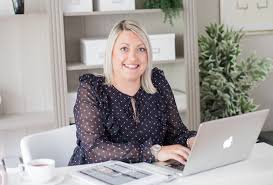
Sarah Banks is an Online Business Manager based in Derbyshire, who specialises in helping women in business simplify technology so they can focus on growing their businesses. With over a decade of experience, Sarah founded Banks’ Business Solutions in 2014 to create a better worklife balance for her family and support others in a similar position. She doesn’t just implement technology, she empowers her clients to understand and confidently use the tools that they need to use as they grow their business.