In today’s evolving sustainability landscape, corporate ESG reporting is no longer only relevant for large multinational companies. As regulatory frameworks like the Corporate Sustainability Reporting Directive (CSRD) continue to reshape how organisations disclose sustainability data, a new reporting tool has emerged that’s gaining rapid traction: the Voluntary Sustainability Reporting Standard for SMEs (VSME). While VSME remains voluntary, it’s becoming increasingly relevant for small and medium-sized enterprises — especially those connected to large company supply chains. In this article, I explain what the VSME Standard is, why it’s important, and which professionals should get familiar with it (plus some good course options to learn the standard, if you’d rather not read the whole thing yourself).
What is the VSME Standard?
The VSME Standard is a structured sustainability reporting framework designed specifically for micro, small and medium-sized enterprises — a group traditionally left out of mandatory ESG reporting regulations. Developed by the EFRAG at the request of the European Commission, VSME provides a simplified and proportionate way for SMEs to disclose environmental, social and governance (ESG) information. Rather than requiring a full regulatory report like CSRD/ESRS, the VSME Standard:
- Lets companies choose between a Basic Module or a more detailed Comprehensive Module, depending on their capacity and stakeholder needs.
- Uses an “if applicable” disclosure approach rather than a mandatory double materiality assessment.
- Focuses on practical, relevant ESG data that smaller organisations can realistically collect and report.
In November 2025, EFRAG helpfully published an Excel template that can be used by corporates to fill in the needed information, and has also provided a filled in example (note that these may be updated from time to time, so always check the EFRAG website for the latest). The basic module covers topics like practices & policies, environmental metrics on energy and GHGs, air, water & soil pollution, biodiversity, water, resource use; workforce metrics on health & safety, remuneration; and governance metrics on corruption and bribery. The comprehensive module adds topics around strategy & business model, environmental metrics on GHG reduction targets, climate transition, and climate risks; social metrics on human rights; and governance metrics on gender diversity in governance bodies, among others.
Why is VSME gaining popularity now?
Even though the VSME Standard is technically voluntary, it’s becoming increasingly important for SMEs in supply chains and value chains, particularly those working with large companies subject to CSRD reporting requirements. Here’s why:
1. Large companies will need SME data
Organisations in scope of CSRD are expected to collect structured sustainability information from their suppliers — and the easiest way to do that is through a common reporting standard like VSME. This means suppliers, even if they’re SMEs, will increasingly be asked to provide ESG data in a way that aligns with a recognised standard.
2. It simplifies ESG disclosure for SMEs
Traditional ESG reporting frameworks (like ESRS or GRI) can be too complex and resource-intensive for smaller organisations. VSME bridges that gap by offering:
- Core ESG metrics that are manageable for smaller teams
- Clear guidance on what to report and when
- The ability to grow into more advanced disclosures over time
3. It helps meet stakeholder expectations
Customers, investors, banks and procurement partners increasingly ask for ESG data — and a VSME-aligned report provides credibility and consistency that ad-hoc questionnaires can’t match.
What about the UK SME Voluntary Emissions Standard?
If you’ve been paying attention to this space – you may recall that a similar initiative has been launched in the UK recently – the UK SME Voluntary Emissions Standard. The Taskforce that has developed this standard recommends that data consumers adopt the standard across finance, procurement, and supply chains; government align policy and procurement processes, including updates to PPN 006 to support consistent SME data requests and remove qualitative questions that cannot be automated; and data collection platforms integrate the standard to reduce duplication, lower costs, and enhance data quality. At howtoesg we have created a free Excel template aligned to the draft UK SME Voluntary Emissions Standard that you can take and adopt for your reporting or data collection needs. Which one is better and what’s the difference? This may have to be a topic for another blog, but in a nutshell the UK standard is narrower, only focusing on climate, while the VSME is broader, including social and wider environmental topics, too.
Who should learn the VSME Standard?
The short answer: anyone who needs to produce, interpret, or request sustainability data in a business context — especially where SME suppliers are involved. Here are the key audiences: SME Leaders & Business Owners: If your company supplies to larger corporations, understanding the VSME Standard can help you respond to ESG data requests efficiently and accurately. Consultants and ESG Specialists: will benefit from knowing how to implement VSME disclosures — particularly when advising clients who are early in their sustainability journey. Sustainability Teams, Reporting Managers, Supply Chain & Procurement Managers: Aligning supply chain requests to the VSME standard is a smart move that could go a long way towards reducing the reporting burden on SMEs. Finance, Risk & Compliance Teams: Investors and lenders are increasingly evaluating ESG performance as part of credit risk and investment decisions. Understanding VSME helps make that information consistent and useful.
Course options for quickly learning the VSME standard (and my personal review)
If you want a practical foundation in VSME reporting — rather than just reading the standard itself — there are a few options:
CSRD Institute: Introduction to the VSME Standard (free)
Great free option that includes 9 short videos, covering:
- What the VSME Standard is and why it exists
- Its objectives, scope, and structure
- Disclosure requirements
- How to present sustainability information
- How SMEs can prepare to report using VSME
- The business case for VSME reporting
It also includes three short knowledge-check quizzes and a practical case study video, which help reinforce the key concepts. I tested out this free course myself – see my full review below.
Position Green: Introduction to the VSME: A practical course on Voluntary ESG Reporting (free)
Seemingly another good option (although I didn’t test this one). It requires registration, but is otherwise free and consists of 5 chapters, covering:
- Introduction
- Purpose & applicability
- The basic module
- The comprehensive module
- Implementation tips
Each chapter included video content, written explanations, and knowledge check quizzes. Access the course here.
CSRD Institute: Reporting with the VSME Standard (EUR 695)
This intermediate-level course covers the VSME Standard from core disclosures to ESG report preparation. It’s designed for sustainability professionals, business leaders, and supply chain managers who want hands-on guidance. At 8 hour estimated completion time, it’s much more comprehensive than the free versions above, and is a great option if applying the VSME will be core to your role. Access the course here.
Full review: CSRD Institute’s Introduction to the VSME Standard
After understanding why the VSME Standard is becoming increasingly relevant especially in CSRD-driven supply chains, I took this course to better understand how the VSME works in practice and which types of enterprises benefit most from it.
The course is structured into nine short video lessons, covering topics such as:
- What the VSME Standard is and why it exists
- Its objectives, scope, and structure
- Disclosure requirements
- How to present sustainability information
- How SMEs can prepare to report using VSME
- The business case for VSME reporting
It also includes three short knowledge-check quizzes and a practical case study video, which help reinforce the key concepts.
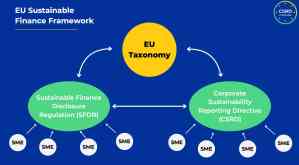
What works well is that, while the course is intentionally high-level, it clearly explains what VSME is, who it is for, and why it matters. This makes it particularly useful for SMEs at an early stage of their ESG journey, as well as for professionals who need a clear introduction before working with SME sustainability data. The course is free and accessible, which lowers the barrier to entry. However, for those with no prior sustainability background or for SMEs collecting ESG data for the first time it should be seen as a starting point, ideally complemented by more in- depth ESG or CSRD-related training. Overall, it’s a solid introductory course that helps clarify expectations around VSME reporting and supports informed next steps. (Please note: I took this course independently, and my opinions reflect personal experience and have not been influenced by the course provider.)
Final thoughts: Why you should care
Sustainability reporting isn’t going away — even for organisations not legally in scope of CSRD. In fact, as larger companies continue to require structured ESG data from their suppliers, the VSME Standard is becoming the de-facto way for SMEs to demonstrate sustainability performance with confidence. Learning how to use VSME effectively will help you:
- Respond to supply chain data requests faster
- Improve access to finance and partnerships
- Strengthen internal sustainability processes
- Prepare for future regulatory shifts
Start with an introductory course, build your internal data collection systems, and you could turn what used to be a compliance chore into a client relationship grower.

About the Author
Patricia supports howtoesg.org as a Partnerships Manager and is based in London. She completed her MSc in Climate Change in 2024. Connect with her on LinkedIn.